A Day Without Fails is a Waste of a Day

The key to success is failing. 

There’s tons written about this, countless TED talks, thousands of podcasts, but this was simply not a concept I grew up with. 

I had no model for healthy failure as a child.

Anything less than an A required explaining in my family.

It didn’t help that I had a perfect older sister.

I was a good student but my sister was an exceptional student.

When I got to high school, her reputation preceded me. I had big shoes to fill, literally and figuratively. In middle school, a teacher once asked if I was wearing canoes on my feet. (I’ve worn size 9 since the 7th grade but more on canoes another time.)

My sister and I did all the same stuff and I worked hard to live up to everyone else’s expectations.

I got straight A’s my first semester in college, with the exception of organic chemistry which I nearly failed.

My dad asked what happened when he saw the C-. 

I screamed back that perhaps he had failed to notice I got A’s in everything else.

I studied and suffered my way through college, feeling out of my league, worried that small town smarts were not going to cut it in the big league.

I didn’t know how to fail and certainly didn’t know how to rebound.

This led to a paralyzing fear of failure and an unhealthy striving for perfectionism.

I avoided things I didn’t know how to do. I sat out activities that might have been fun or silly for fear of looking stupid. I kept quiet when I had things to say because I didn’t want to embarrass myself.


You’ve probably seen 6000 (or 60,000) posts on social media about recovered perfectionists. None of them are mine. The thoughts we’ve practiced for 10 or 20 years don’t disappear overnight.

It’s a constant practice.

As a parent, I’m doing my best to teach my 7-year old that failure is part of the process. Instilling him with a healthy relationship to failure means I have to talk about my own failures.


I listened to a podcast where Todd Herman shared the 4 questions he asks his kids at dinner every night to build resilient humans.

Here's the one that stood out:

Did you have any good fails today?

Todd says a day without fails is a waste of a day. 

This podcast completely changed our dinner conversation and gave us a way to normalize failure. (I recommend it regardless of whether you have children.)

It’s given me a way to laugh about things that are uncomfortable, like the time I posted about an event and invited thousands of people to a workshop on Networking for Inroverts.

I don’t think I would have noticed my typo except for the stranger who publicly commented IN ALL CAPS that I should fix my spelling error.

My first thought was: How mortifying, I better delete the post ASAP.

My second thought was: Lots of people commented and shared and probably didn’t notice.

My third thought was: You don’t need to be a perfect speller to be a great networker.

I chose to leave the post up. It was uncomfortable but I'm a work in progress.

What about you?

What are your good fails?

I’d love to hear them.


Hi, I’m Madeline.

I help quiet leaders speak up in a world of loud talkers and I help organizations articulate their vision in clear, concise messaging.

I've been called a lifesaver and a secret weapon and my superpower is listening. I can take all the ideas in your head and put them together in a way that makes sense and tastes good to other people.

Get in touch at madeline@madelineschwarz.com

The #1 Question to Stop Asking at Networking Events

A couple years ago, I went to an Ellevate event where all the name tags had conversation starters. Mine said The title of my book is:

When I approached a small group of people, someone asked “What’s the title of your book?” I answered Small Town Girl in the Big City.

This started a long conversation about my childhood growing up on a farm in rural West Virginia and how I came to live in Brooklyn. 

I’m sure we eventually talked about our professional lives but it wasn’t what sparked the connection. And it wasn’t the reason we kept in touch.

How many times have you answered the question “What do you do?”

How many times did it kick off a really great conversation where you felt totally at ease?

I read a Forbes article recently where the author asked when’s the last time you delivered a 30 second elevator pitch and got offered a job? Probably never.

What do you do is my least favorite question because it asks multi-dimensional people to define themselves in one dimension.

It puts you on the defensive trying to sum up 10, 20 or 30 years of professional expertise in a 30 second pitch.

On the flip side, it makes the other person feel like they’re being sold to when they just came for the wine and cheese.

Before you kick off another conversation with What do you do consider this:

I recently surveyed 71 introverted professionals about how they're thinking about, feeling about and experiencing networking 1 year into the pandemic.

30% of respondents have a conversation problem. They struggle with what to say, how to introduce themselves, and how to keep conversations going once they've started.

46% have a mindset problem. They're in their heads, worried about being interesting and anxious about coming across as contrived and transactional.

These are fixable problems.

There are much better ways to start conversations and build genuine relationships.

Join me on Wednesday April 7th for a workshop on
Networking for Introverts.

I will share tips and strategies to build your confidence, sharpen your skills, and make better connections. Details are here.

And if you can’t make the workshop, check out my interview on the Spitfire podcast? We talk trends from the survey and tips to move past the awkward and start networking with ease.

 
Headshot 3.2021.jpeg

Hi, I’m Madeline.

I help quiet leaders speak up in a world of loud talkers and I help organizations articulate their vision in clear, concise messaging.

I've been called a lifesaver and a secret weapon and my superpower is listening. I can take all the ideas in your head and put them together in a way that makes sense and tastes good to other people.

Get in touch at madeline@madelineschwarz.com

Networking Redefined

TWO PEOPLE replied to my Networking for Introverts survey that they'd rather get a root canal than go to a networking event. 

I went to the dictionary to see what Miriam Webster has to say about networking and they define it as:

the exchange of information or services among individuals, groups, or institutions

specifically: the cultivation of productive relationships for employment or business

Sounds pretty stale and transactional.

Doesn't exactly make you run toward the next zoom happy hour.

But we can redefine networking.

I see networking as an opportunity to connect with interesting people and make new friends
.

The number one reason people avoid networking, public speaking, or difficult conversations is they think it’s going to be painful. So painful they’d rather get a root canal without novocaine (a respondent’s actual words).

My mission is to make communication more fun.

Fun is the missing ingredient. When it’s fun, you can inspire other people, share your story, lead your team and make change in the world.

What kind of change?

Yesterday a client shared she aced 7 rounds of interviews and accepted a new job offer. She got a title promotion and shattered her own glass ceiling.

Another client gave her best presentation ever and said she felt more confident than ever in her ability to do her job.

I give people tools to not only speak differently, but think differently and it changes everything.

Don’t wait until you need a new job or want to sell something to start networking.

Start now.

I can help you get clear on your message, connect with any audience and change your mindset so you never think about communication the same way. Let’s talk. 

 
Madeline Schwarz Headshot_small.jpg

Hi, I’m Madeline.

I help quiet leaders and organizations communicate their story and invite audiences into their world.

I use my signature process to make communication fun and transform how you communicate at work, at home, in life.

Get in touch at madeline@madelineschwarz.com

What's Your Strategy?

I recently took my 7-year old ice skating.

I grew up skating, first on a pond, then on a small ice rink in Charleston, WV.

It was a regular part of my childhood, one of the favorite activities at Camp Dad, but somewhere in between age 7 and adulthood in NYC, my skills got pretty rusty. 

This was only the second time I’d been on the ice since a bad ankle sprain a few years ago.

I laced up my skates, put on my gloves and was excited to rediscover my love of ice skating (and the only winter sport I enjoy). 

Then I stepped onto the ice. 

My footing was shaky and I almost immediately lost my balance.

I clung to the wall. 

I could barely stand, yet alone glide.

I was nervous. 

I was stiff. 

I did a few laps around the rink wondering when this got so hard. 

Then I watched my son.

His strategy was to RUN forward on the ice as fast as he could until he wiped out. 

He’d topple over, dust off his snow pants, stand up and do it again. 

No hesitation, no worries about falling, no attention to what other people were doing.

I compared that to my own strategy and realized I was devoting 100% of my energy to NOT falling. 

I was working very hard at staying upright. As a result, I completely lost sight of what I wanted to happen. My goal was to glide forward on the ice, not to stand straight like a toothpick.

I thought back to lessons with my dad and realized what I was missing. 


I bent my knees. I leaned in. 

It made me think of public speaking and what happens when you’re nervous.

  • You cling to the walls

  • You show up stiff

  • You focus all your attention on NOT failing

The next time fear takes over and you find yourself bracing for the worst, lean in. 


Breathe. Relax your body.

It makes things easier, whether you’re balancing on ice, standing on stage or speaking on zoom. 

This is exactly what I help my clients do:

  • Show up for your goals even when you’re nervous

  • Connect with your audience even when it's scary

  • Lean into the experience so you can have more fun

Reach out if you want help.

 
Madeline Schwarz Headshot_small.jpg

Hi, I’m Madeline.

I help quiet leaders and organizations think and speak differently so they can communicate their story, lead their teams and make change in the world.

Get in touch at madeline@madelineschwarz.com

Your Feelings are Valid

Brene Brown did a podcast last spring called Permission to Feel. She said that the average American can identify three emotions - mad, sad, glad. If you’ve watched Inside Out (one of my favorite movies) you can probably add disgust and fear to the list. 

This limited emotional vocabulary leaves us vastly unprepared for the human experience.

In a matter of hours or days or seconds, you might feel anxious, disappointed, and enraged as you witness a violent mob descend on the US capital. Or you might feel hopeful, elated, and relieved to usher in a new president and a woman Vice President for the first time in American History.

You might feel exhausted from living through such a prolonged state of crisis and you might feel inspired by Amanda Gormon’s message of hope in her inauguration poem The Hill We Climb.

How do you process these feelings?

To quote my friend Cait Donovan, who hosts a fantastic podcast on burnout, it is okay to admit you are not okay. 

In fact, I challenge you to eliminate the word okay from your vocabulary. Someone recently challenged me to stop using good, fine and okay because they’re words that don’t mean much. 

Instead, start naming what you’re actually feeling. Challenge your brain to think beyond glad, sad, and mad and make space for those feelings. 

My word of the year is allow. 

I chose this word as a reminder to allow all my feelings, to not pass over the anger, fear, sadness, grief, and exhaustion, and commit to experiencing it all.

The impulse is to push them away but it's actually allowing them that will help you let them go.

Do you have a word or theme of the year?

I’d love to hear what it is. 

 
Madeline Schwarz Headshot_small.jpg

Hi, I’m Madeline.

I help quiet leaders and organizations communicate their story and invite audiences into their world.

Together we’ll transform how you communicate, at work, at home, in life.

Get in touch at madeline@madelineschwarz.com

How to respond to an idea you can't use

It was snack time at my house and my kiddo pulled a giant orange out of the fridge and told me it was a dinosaur egg.


In a previous life, I might have argued, and stated the obvious.


Instead, I played along. 

This didn't always come naturally, but it's a skill I learned in improv. 

Accept what's given, build on other people's ideas.


That’s what I did – I acknowledged his reality and indulged in playful banter.

Why not eat dinosaur eggs for snack?

This technique is useful for:


  • Brainstorming sessions where teams use their imagination instead of crushing each other's ideas (It’s possible and not just in dream land!)

  • Business meetings that spur creativity instead of verbal tug of war (Yes, please)

  • Family interactions and long car trips (purple gas station where the gas costs a dollar, I’m in) 

The next time someone offers up a bad idea at work, instead of jumping to shut it down, play along.

Sometimes those crazy ideas solve themselves when you’re willing to indulge them. That’s what happened to a design team I was working with. The client wanted to use QR codes and instead of compiling a list of why it was a terrible idea, the developer got curious, asked questions and the client thought it threw and eliminated it on their own.

Let people convince themselves if an idea is viable.


It makes life more fun. 

It ends arguments. 

It spurs creative thinking and innovation. 

For more communication lessons I’ve learned from Improv.

 
Madeline Schwarz Headshot_small.jpg

Hi, I’m Madeline.

I help leaders and organizations tell their stories, lead their teams and make change in the world.

I combine a project manger’s sense of process and a creative’s sense of play to bring more clarity, creativity and collaboration to communication.

Get in touch at madeline@madelineschwarz.com

Dream with Ambition

“Dream with ambition. Lead with conviction. See yourself in a way that others may not, simply because they haven't seen it before.”   

– Vice President-Elect Kamala Harris

Yesterday, I caught the most amazing moment of 2nd-grade remote school.

They were discussing the book Grace for President and one of the students told the teacher “I think you should be president. 

She replied, “I'm honored and I hope to teach a future president.”

What are you dreaming of? 

And how can I help?

Next week, I'm speaking at the Career Breakthrough Summit, an event for professional women designed to support you as you get promoted and move toward a senior leadership role.

If you’ve ever talked yourself out of opportunities because you worry it might require too many personal sacrifices, this event is for you.

Liz St. Jean is a leadership expert devoted to closing the leadership gender gap and ending dysfunctional workplaces.

I couldn’t be more excited to share 5 principles you can use to activate your empathy and listening power in difficult conversations. Join me Monday, November 16th.

I’m one of 14 experts sharing tips and strategies to advance yourself without losing yourself.

Topics range from setting boundaries, making working motherhood work for you and taking control of your energy in the most stressful situations..

Tickets are free and you can join us here.

 
Madeline Schwarz Headshot_small.jpg

Hi, I’m Madeline.

I help quiet leaders and organizations communicate their story and invite audiences into their world.

Together we’ll transform how you communicate, at work, at home, in life.

Get in touch at madeline@madelineschwarz.com

What's your vegetable?

Yesterday I joined Rachel Staigar and alternew founder Nancy Rhodes for morning meditation and journaling (if ever there was a day where I needed more calm and connection, that was it). 

Instead of introducing ourselves with what we do, we answered the question. "If you were a vegetable, what would you be?"

I loved the answers (especially brussel sprouts because you didn't know how much you'd love them until you tried them) – they got everyone laughing and loosened up the room.

But mostly I loved this activity because it added creativity and humor to something that might otherwise be mundane.

This is exactly what I do with communication – make it more fun and compelling and creative. 

It's a lot like cooking – I give you a recipe to speak clearly and concisely while also letting your personality shine through. 

Want a peek into my process? 

It also starts with vegetables (and no you don't have to eat anything you don't like). 

  • First, we identify your strengths and hone in on your message.

  • Then, we work on your mindset so you never look at communication the same way.

  • Finally, we practice your delivery and add in the spices so you can engage any audience at any time.

Here's how a corporate client described our work together:

"Madeline unlocked so much power in me, and incredibly, she did this in the most lighthearted, subtle and even fun way....Madeline got me to the point where I no longer “need” her help to prepare a presentation. Now I just *want* her in my corner on every talk I give because I’ve seen firsthand her gift for elevating a good-enough talk into something truly powerful and engaging.."

Just like brussel sprouts, you don't know what you're missing until you try it. 

Want to learn more about working together?  Let's chat.

 
Madeline Schwarz Headshot_small.jpg

Hi, I’m Madeline.

I help quiet leaders and organizations communicate their story and invite audiences into their world.

I’ve taught hundreds of professionals to confidently speak in public, craft talks that resonate with your audience and lead with authority.

Get in touch at madeline@madelineschwarz.com

Lessons From The Lego Bin

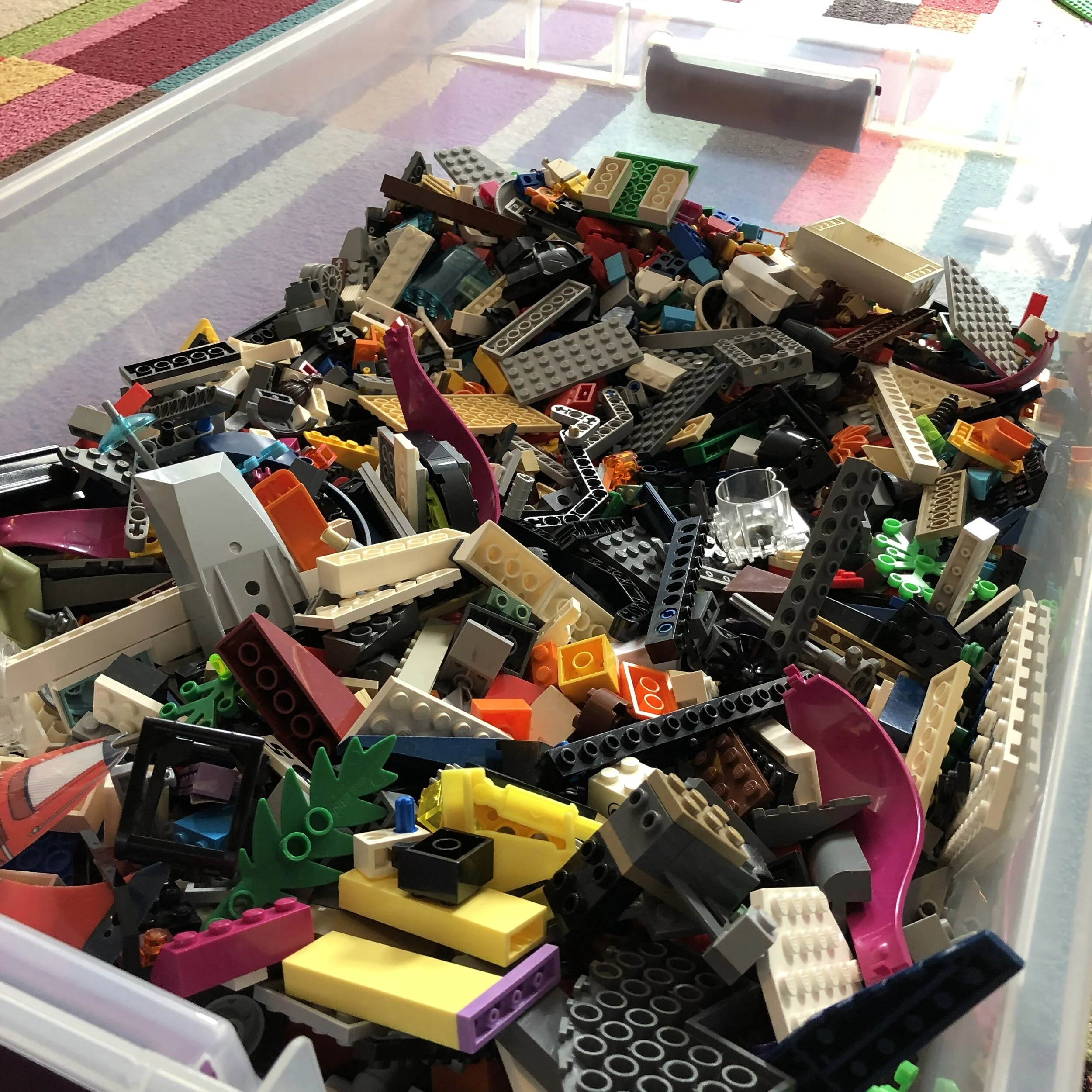
Last night, I was rummaging through the lego bin in search of a tiny yellow arm and I commented that it was like looking for a needle in a haystack.

My 7-year-old didn’t know what that meant.

As I explained, I thought of all the long meandering presentations I’ve sat through where it’s hard to find the point even when you’re paying attention.

There’s a lot of hay (words, charts, graphs) but it doesn't come together – it fails to thread the needle.

Good presentations don’t include all the details, they include carefully edited details. 

Good presentations don’t include every piece of data ever published, they include the most persuasive.

Good presentations don’t share every story, they curate the best stories.

I just finished coaching for Shine bootcamp where I helped 4 women transform their ideas into conference talks. 

The topics ranged from advocating for children with disabilities to diversifying engineering leadership.

4 different people, 4 different topics, 4 different talks, but for each the process was the same.

  1. We got clear on what they wanted the audience to walk away with.

  2. We defined their 3 most important points. 

  3. We selected the most relevant details and data and crafted compelling storylines. 

The result? 

  • Talks that had direction and laser focus. 

  • Talks that deeply engaged their audience. 

  • Talks that changed conversations.

Are you working on a talk? 

Are you ready to change conversations?

Get in touch.

3 Skills to Increase Your Presence

These 3 simple skills will make you a better presenter, better teammate, better client manager, and all-around better communicator.

You might be a great designer, fantastic problem solver, or renowned subject matter expert, but in the words of Warren Buffet:

“If you can’t communicate your ideas and get them across to other people, you’re giving up your potential.”

So how do you hone these skills and what’s entailed in a good presentation?

The best presenters are not just good speakers, they’re also good listeners.

You might think you need only to prepare persuasive speaking points in order to sell your work (and you do) but in order to capture attention and gain the trust of your audience, you also need to listen.

Too often we forget that listening is 50% of communication.

Whether you’re presenting research, creative concepts, or new company policies, listening allows you to tap into the hearts and minds of your clients, your teammates and stakeholders.

I’ve put together a 3-part framework to help you stay on track:

1. Be clear

When I work with clients, the first thing we do is define your objective.

Before you open Powerpoint (or Keynote or google slides), get clear on your message.

Spend a couple minutes thinking through the purpose of your presentation and what you want the audience to walk away.

Write down the 3 most important points you’d like to communicate.

You might have 30 things you want to talk about but they're not all equally important and limiting it to 3 provides focus and direction.

2. Be compelling

Once you’re clear on the purpose of your presentation, your job is to create an experience that builds interest and intrigue. There are many great techniques to engage your audience, including pictures, questions, humor, and stories.

Stories grab attention, elicit emotion and make your topic memorable. They are the felafel amidst the grilled chicken and pasta so if you want your audience to pay attention, spend time on your stories.

3. Be curious

Once you’ve designed your presentation, the next step is to stay curious when delivering your presentation. This is often the most challenging part, especially when things don't go as planned.

I’ve worked with creative teams for nearly twenty years and noticed two typical responses when people are met with critical feedback or concerns.

  • Option 1: Get defensive

  • Option 2: Shut down and don't respond at all

These are natural human responses to stress but neither gets you closer to your goal.

Curiosity, on the other hand, helps you move out of flight or fright and stay calm amidst tough questions and concerns.

When you feel the urge to defend your work or tune out, ask yourself these questions:

  • Why might the other person feel that way?

  • What additional information do they need to feel comfortable?

Curious listening helps you discover the additional information you need to present in order for the audience to feel comfortable. If you're not listening, you might miss the most important details.

Want tips to tap into your natural curiosity? Check out Curiosity Kills the Cat. Or Does it.

 
Madeline Schwarz Headshot_small.jpg

Hi, I’m Madeline.

I help quiet leaders and organizations communicate their story and invite audiences into their world.

Together we transform how you communicate, at work, at home, in life.

Get in touch at madeline@madelineschwarz.com.

Stories And Pandemic Cooking

Raise your hand if you’re tired of cooking the same old recipes. Or tired of cooking at all.

I recently saw my friend’s picture of homemade falafel on Instagram. The comments said she was crushing the pandemic cooking game.

 
Screen Shot 2020-10-06 at 2.16.07 PM.png
 

Month six of the pandemic, I did not feel like we were crushing pandemic cooking. Sure, I was grateful to have food in the fridge and be able to cook at all, but the menu in our house was starting to feel seasonally predictable. 

Enter falafel.

New flavors, new textures, new colors on the plate. 

This one recipe brought new energy to our kitchen and new excitement to our dinner table ( bonus: our 6-year-old ate it).

It took me back to a training I did for a team of data scientists. They wanted to know how to stand out in a lineup of back to back conference speakers. 


My answer was storytelling. 

We did an exercise I call the storytelling grab bag, one of my favorite activities to get people thinking creatively about how to illustrate their point.

They loved it. They laughed. They loosened up. 

But they weren’t sure it was relevant for an academic setting.

And that’s where they’re wrong.

If you want to stand out in a lineup of speakers, if you want to be the shiny fish in a sea of academics, if you want to be the most compelling presenter at your company, stories are key. 

Stories are the falafel amidst the pasta and grilled chicken.

They bring color and context to your work, they bring relevance to your research and they bring life to your ideas.

If you want to improve your storytelling, stand out in meetings, and wow your clients, join me tomorrow October 7th. 

I'm doing a training for the Creatives Roundtable and I'll be sharing tools to be clear, concise and compelling.

Tickets are here but hurry, sales end tonight.

 
Madeline Schwarz Headshot_small.jpg

Hi, I’m Madeline.

I help quiet leaders and organizations communicate their story and invite audiences into their world so they can lead their teams, lead their organizations and make change in the world.

Together we’ll transform how you communicate, at work, at home, in life.

Get in touch.

3 Presentation Tips You Can Learn From Kids

Last night I was reading bedtime stories to my 6-year-old, or rather he was reading to me, and I learned 3 things you can apply in your adult life to improve communication and show up like an expert. 

1. Every time he came to a word he wasn't sure about, he got really, really quiet, so quiet that I could barely hear him.

He was hedging his bets, not wanting to speak up because he was afraid of making a mistake. It got me thinking about all the places adults do this:

  • You trail off mid-sentence when you're unsure about your argument

  • You talk really quietly because you don’t want to make a mistake

  • You don’t talk at all because you fear being judged 

Is this you?

So much of your ability to persuade other people comes from your confidence. 

And confidence starts with believing you have something valuable to share and that you have the right to be speaking in the first place.

2. Even when my kiddo could sound out a word, he didn’t necessarily know what it meant.

This also happens in conversation.

My husband and I might try explaining a complex topic and think our 6-year old is following along, but if we stop and ask if he knows what a particular word means, he often shakes his head NO. 

The same thing happens when speaking in front of an audience, or at a business meeting. 

How many times have you sat through a professional presentation littered with industry jargon and acronyms you had to look up? 

You could be the premier subject matter expert, but if you don’t speak in terms your audience understands, they might have no idea what you’re talking about and miss your point entirely. 

Assume you know more than your audience and define concepts, terms and acronyms.

Explain things like you’re talking to my 6-year old. 

If you’re worried that you’ll look stupid, it’s quite the opposite. Instead, you’ll be admired for your ability to translate your work to a general audience and make it accessible and relevant.

3. The last thing I noticed is how my kiddo likes to look through all the pictures before he reads the book.

He likes to preview the material and get a sense of what’s coming. 

This is exactly what happens in a good presentation.

Hook your audience at the beginning and then let them know what’s coming.

This lets your audience know they’re in the right place, that it will be a good use of their time, and that your information will be relevant to them. 

Which of these tips can you use right away? Drop me a note and let me know.

If you have kids at home, turn bedtime stories into practice time. 

I love helping clients improve their confidence and build their presence with tools and strategies that make communication more fun.

Here’s what my client Mimi Bishop said:

“Madeline asks the good hard questions that create a presentation that draws people in and engages them so they walk away having learned something from someone they will not forget. With Madeline’s expert help, the quality of my presentation is night and day.”

Do you want to be more clear and concise at work? 

Do you want to improve communication on your team? 

Do you want to turn your idea into a talk?

I can help you speak clearly and concisely in any situation.

Let’s chat.

 
Madeline Schwarz Headshot_small.jpg

Hi, I’m Madeline.

I help quiet leaders and organizations communicate their story and invite audiences into their world.

Together we’ll transform how you communicate, at work, at home, in life.

Get in touch at madeline@madelineschwarz.com.